
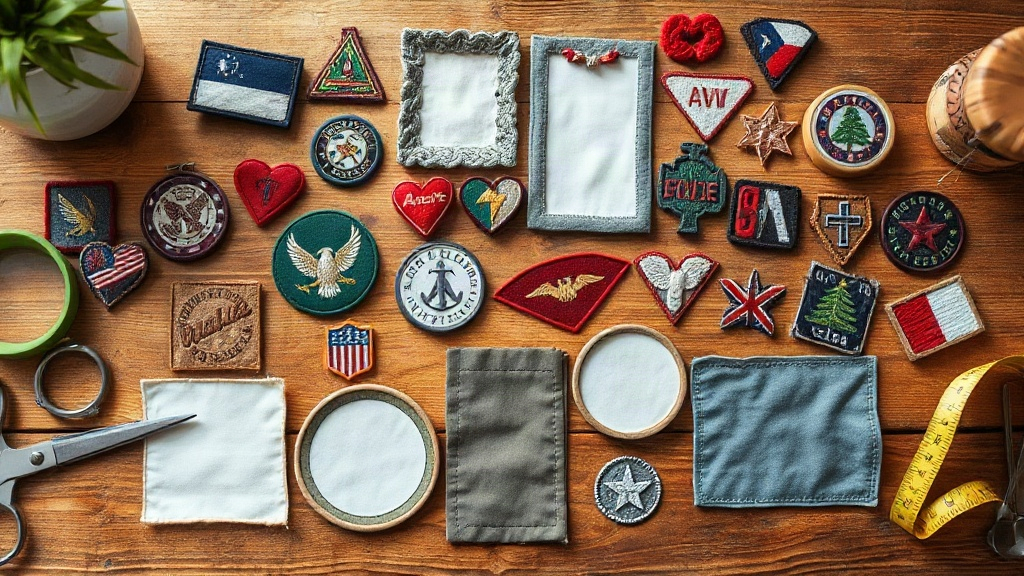
You have probably spent hours arranging patches on a jacket or a display board, only to step back and feel that something is off. The individual patches look great, but the overall composition feels cluttered or disconnected. That is where smart blanks come in. These are not patches themselves, but the deliberate empty spaces or neutral filler elements that give your patch collection room to breathe. In this post, we will explore what smart blanks are, why they are more than just empty space, and how you can use them to make your patch projects look intentional and polished. Whether you are a casual collector or a seasoned designer, understanding smart blanks can transform the way you approach patch layouts.
What Exactly Are Smart Blanks?
At their core, smart blanks are the areas in a patch arrangement that contain no embroidered design. They can be literal empty spaces between patches, or they can be patches that are intentionally minimal, such as a solid-color background with a simple border. The term "smart" refers to the strategic use of these blanks to enhance the overall visual impact. Unlike random gaps, smart blanks are placed with purpose: to guide the eye, to separate themes, or to highlight a focal patch.
In the context of patch collecting, smart blanks often take the form of blank patches that you can customize yourself. These blank patches serve as placeholders or as canvases for your own embroidery or iron-on designs. They allow you to create a cohesive look without overwhelming the viewer. For example, if you have a large central patch with intricate details, surrounding it with smart blanks in a complementary color can make the central design pop.
Why Smart Blanks Matter in Patch Design
When you look at a well-curated patch jacket, you might not consciously notice the empty spaces, but you feel their effect. Smart blanks perform several key functions:
- Visual breathing room: They prevent the design from feeling too dense. Just like in graphic design, white space is essential for readability and impact.
- Focus and hierarchy: By leaving strategic blanks, you direct attention to the most important patches. This creates a natural flow for the eye.
- Balance and symmetry: Smart blanks can balance asymmetrical designs. If you have a heavy patch on one side, a smart blank on the other can restore equilibrium.
- Customization flexibility: Blank patches allow you to add your own touch later, whether with fabric markers, embroidery, or appliqué.
Without smart blanks, even a collection of beautiful patches can look like a chaotic jumble. They are the unsung heroes that make a layout look professional.
How to Incorporate Smart Blanks into Your Patch Projects
Using smart blanks effectively requires a bit of planning. Here are some practical steps to get started.
1. Plan Your Layout on a Flat Surface
Before you sew or iron anything, lay out all your patches on a flat surface. This could be a table, a piece of cardboard, or directly on the garment. Step back and look at the arrangement. Identify areas that feel too crowded. Those are the spots where a smart blank could help. Move patches around, and try placing a blank patch or simply leaving a gap. You will quickly see how the composition improves.
2. Choose the Right Blank Patches
Not all blank patches are created equal. Consider the following when selecting smart blanks:
- Color: Neutral colors like black, white, gray, or tan are versatile. They can blend with many designs or provide a subtle contrast.
- Texture: A twill or canvas blank adds a different texture than an embroidered patch, which can be visually interesting.
- Size: Have a variety of sizes on hand. Sometimes a small blank is enough; other times you need a larger one to fill a significant gap.
- Shape: Rectangles and circles are common, but custom shapes can also serve as smart blanks if they are simple.
You can find blank patches at craft stores or online. Many patch suppliers offer them in bulk, which is cost-effective if you plan to use them frequently.
3. Use Smart Blanks to Create Themes
If your patch collection has different themes, such as travel, music, or nature, smart blanks can act as separators. For instance, you could place a row of blank patches between a group of travel patches and a group of music patches. This visually signals a change in theme without needing a literal line. It is a subtle but effective technique.
4. Don't Overdo It
Like any design element, smart blanks should be used in moderation. Too many blanks can make the layout look sparse or unfinished. The goal is to enhance, not to dominate. A good rule of thumb is to have at least one blank for every three to four patches, but adjust based on the complexity of the designs.
Creative Ways to Use Smart Blanks
Beyond simply filling gaps, smart blanks can be used creatively to add functionality or personalization.
Interactive Patches
Blank patches can serve as backgrounds for interchangeable designs. You can attach a patch with hook-and-loop fastener (Velcro) to a blank patch, allowing you to swap out designs whenever you like. This is perfect for patches that you want to change based on your mood or the occasion. The blank patch provides a stable base and keeps the overall look clean.
DIY Embroidery Projects
If you enjoy embroidery, blank patches are your canvas. You can embroider your own designs, monograms, or small motifs. This adds a personal touch that no mass-produced patch can match. Start with simple stitches and build your skills. The smart blank becomes a unique piece that ties your collection together.
Color Blocking
Use blank patches in solid colors to create a color-blocking effect. For example, arrange a few blank patches in a gradient of blues next to a detailed patch with blue accents. The blanks echo the colors and create a cohesive palette. This technique works especially well on denim jackets or canvas bags.
Common Mistakes to Avoid with Smart Blanks
Even with the best intentions, some pitfalls can undermine the effect of smart blanks. Here are a few to watch out for:
- Ignoring scale: A tiny blank next to a huge patch looks accidental. Match the scale of the blank to the surrounding patches.
- Using clashing colors: A bright neon blank might distract rather than enhance. Stick to colors that complement your collection.
- Placement without purpose: Randomly placing blanks can create visual noise. Always have a reason for each blank.
- Forgetting about wear and tear: If you are adding blanks to a garment that gets heavy use, ensure they are securely attached and durable.
By avoiding these mistakes, you will make your smart blanks work harder for you.
Frequently Asked Questions About Smart Blanks
What are smart blanks in patch collecting?
Smart blanks are intentional empty spaces or minimal patches used in a patch layout to improve visual balance, focus, and overall aesthetics. They are not just gaps; they are design elements that help your patches look their best.
Can I make my own smart blanks?
Absolutely. You can purchase blank patches and customize them with fabric paint, embroidery, or appliqué. Alternatively, you can simply leave empty space in your arrangement, which acts as a smart blank without any extra materials.
How many smart blanks should I use?
There is no fixed number. A good starting point is one blank for every three to four patches, but it depends on the complexity and size of your patches. Trust your eye and adjust until the layout feels balanced.
Where can I buy blank patches for smart blanks?
Blank patches are available at craft stores, online marketplaces, and specialized patch suppliers. Look for ones that match the fabric and color of your existing patches for a seamless look.
Do smart blanks work on any type of garment?
Yes, smart blanks can be used on jackets, jeans, bags, hats, and more. The key is to choose blanks that are appropriate for the fabric and purpose. For example, on a lightweight shirt, use lightweight blank patches to avoid stiffness.
Smart blanks might not be the first thing you think of when building a patch collection, but they are a powerful tool for elevating your designs. By understanding their role and applying them thoughtfully, you can create patch arrangements that look intentional, balanced, and uniquely yours. So the next time you lay out your patches, consider where a smart blank could make all the difference.