
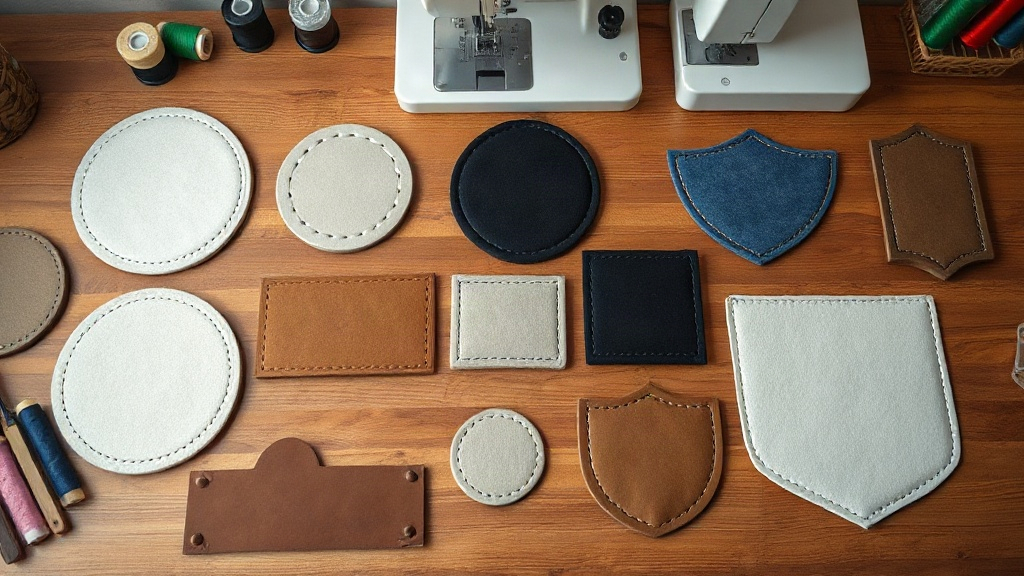
If you've ever ordered custom patches, you know the struggle: sending your design, waiting for a proof, and hoping the final product matches your vision. But what if there was a way to skip the guesswork and get perfect patches every time? Enter smart blanks – a game-changer in the world of custom patches. These pre-made patch bases allow you to add your own design without the hassle of starting from scratch. In this article, we'll explore what smart blanks are, how they work, and why they're becoming the go-to choice for businesses, event organizers, and hobbyists alike.
What Are Smart Blanks?
Smart blanks are essentially blank patch templates that come with a pre-defined shape, border, and backing. They are made from high-quality materials like twill, felt, or leather, and are ready to be customized with your own embroidery, printing, or applique. Think of them as a canvas for your creativity – but instead of painting, you're adding your logo, artwork, or text. The "smart" part comes from the fact that these blanks are designed to work seamlessly with standard patch-making techniques, ensuring a professional finish without the need for specialized equipment.
Why Choose Smart Blanks Over Traditional Methods?
Traditional custom patches require you to create a design from scratch, which often involves multiple proofs, color matching, and production delays. With smart blanks, you bypass these steps because the base is already made. You simply add your design on top, and the result is a polished, durable patch. This approach not only saves time but also reduces costs, as you're not paying for the production of a custom base. Plus, the uniform quality of smart blanks means you get consistent results across large orders.
How Smart Blanks Work: A Step-by-Step Guide
Using smart blanks is straightforward. Here's a typical process:
- Choose your blank: Select from various shapes (circle, square, shield), sizes, and materials. Popular options include twill, which is durable and easy to embroider, and felt, which offers a soft, vintage look.
- Prepare your design: Create or adapt your artwork to fit the blank's dimensions. Most suppliers provide templates to help you align your design correctly.
- Apply your design: Depending on the blank, you can embroider, heat-press, or sew your design onto the surface. Embroidery is the most common method for a premium look.
- Finish and attach: Once your design is applied, you can add a backing (iron-on, Velcro, or adhesive) and attach the patch to your garment or accessory.
This method is so efficient that even beginners can achieve professional-looking patches. And because the blanks are pre-made, you avoid the risk of misprints or misalignment that can occur with custom production.
Materials and Options for Smart Blanks
Smart blanks come in a variety of materials to suit different needs:
- Twill: A tightly woven fabric that's ideal for detailed embroidery. It's durable and holds colors well.
- Felt: A softer, thicker material that gives a classic, textured look. Great for vintage or casual patches.
- Leather: Premium and stylish, leather blanks are perfect for high-end brands or fashion patches.
- Reflective: For safety gear or sportswear, reflective blanks add visibility.
You can also choose from different border styles (merrowed, laser-cut, stitched) and backings (iron-on, sew-on, adhesive). This flexibility means you can tailor your patch to your exact requirements.
Benefits of Using Smart Blanks for Your Custom Patches
Why should you consider smart blanks for your next patch project? Here are some compelling reasons:
- Time-saving: Skip the design-to-production cycle. With blanks, you can have your patches ready in a fraction of the time.
- Cost-effective: No need to pay for custom dies or setup fees. Blanks are mass-produced, so they're more affordable.
- Consistent quality: Every blank is identical, so your patches will look uniform, even in large quantities.
- Eco-friendly: By using pre-made bases, you reduce waste from misprints and overproduction.
- Versatile: Whether you need a single patch or thousands, smart blanks scale easily.
For businesses, this means faster turnaround on branded merchandise. For event organizers, it means quick production of commemorative patches. For crafters, it means more time creating and less time troubleshooting.
Real-World Applications of Smart Blanks
Smart blanks are used in a wide range of industries and scenarios. Here are a few examples:
- Corporate branding: Companies use smart blanks to create employee uniforms, promotional items, and corporate gifts with their logo.
- Sports teams: Teams order blanks in bulk and add player numbers, mascots, and sponsor logos.
- Events and festivals: Organizers create limited-edition patches for attendees, often with dates and themes.
- Military and scouting: These groups rely on patches for rank, affiliation, and achievements. Smart blanks allow for quick updates and replacements.
- Fashion and streetwear: Designers use blanks to add unique patches to jackets, bags, and hats, creating custom pieces.
The possibilities are endless, and the low barrier to entry makes smart blanks accessible to everyone.
Tips for Getting the Most Out of Smart Blanks
To ensure your patch project turns out perfectly, keep these tips in mind:
- Choose the right material: Consider the intended use. For heavy-duty wear, go with twill or leather. For a softer feel, felt is a good choice.
- Mind the design size: Make sure your artwork fits within the blank's borders. Leave a small margin to avoid clipping.
- Test your technique: If you're new to embroidery or heat pressing, practice on a spare blank first.
- Select the appropriate backing: Iron-on is convenient for garments, while sew-on is more secure for items that get heavy use.
- Order samples: Before committing to a large order, request a sample to check quality and compatibility with your design.
By following these tips, you'll achieve professional results that rival custom-made patches.
Common Mistakes to Avoid with Smart Blanks
Even with the simplicity of smart blanks, some pitfalls can trip you up. Avoid these common mistakes:
- Ignoring the grain: If you're embroidering, the direction of the fabric grain can affect the final look. Always align your design with the grain.
- Using the wrong thread: Choose a thread that matches the blank's material and your design's colors. Polyester thread is durable and colorfast.
- Overheating during heat press: If using heat-transfer, follow the temperature and time guidelines to prevent scorching.
- Not securing the design: Ensure your design is properly adhered or stitched to prevent peeling or fraying.
With a bit of care, you can avoid these issues and produce flawless patches.
Frequently Asked Questions About Smart Blanks
What exactly are smart blanks and how do they differ from regular blank patches?
Smart blanks are pre-made patch bases that come with a finished edge and backing, ready for your custom design. Unlike regular blank patches, which may require you to cut and finish the edges yourself, smart blanks are production-ready. They are designed to streamline the customization process, saving you time and ensuring a professional finish.
Can I use smart blanks for iron-on patches?
Absolutely. Many smart blanks are available with iron-on backing already applied. You simply add your design, then iron the patch onto your garment. If your blank doesn't have an iron-on backing, you can purchase iron-on adhesive sheets and apply them yourself.
Are smart blanks suitable for small orders or just bulk?
Smart blanks are perfect for both small and large orders. Because they are pre-made, there's no minimum order quantity. You can buy a single blank for a personal project or thousands for a corporate event. The cost per patch decreases with larger orders, but the convenience remains the same.
How do I ensure my design aligns correctly on a smart blank?
Most suppliers provide digital templates that match the dimensions of their smart blanks. Use these templates in your design software to position your artwork accurately. If you're embroidering, use a hoop that fits the blank and mark the center point to guide your stitching. Taking a few extra minutes to align your design will pay off in the final result.
What's the best way to attach a smart blank patch to a garment?
The best method depends on the backing and the garment. Iron-on is quick and easy for cotton or polyester fabrics. For items that will be washed frequently or subjected to heavy wear, sew-on is more durable. Some people use both: iron-on to hold the patch in place, then sew around the edges for extra security. Always test on a small area first to ensure compatibility.
Whether you're a business owner looking to brand merchandise, an event planner creating memorable keepsakes, or a DIY enthusiast, smart blanks offer a smart solution. They combine the ease of pre-made bases with the flexibility of custom design, giving you the best of both worlds. So why not give them a try? Your next patch project could be your easiest yet.