
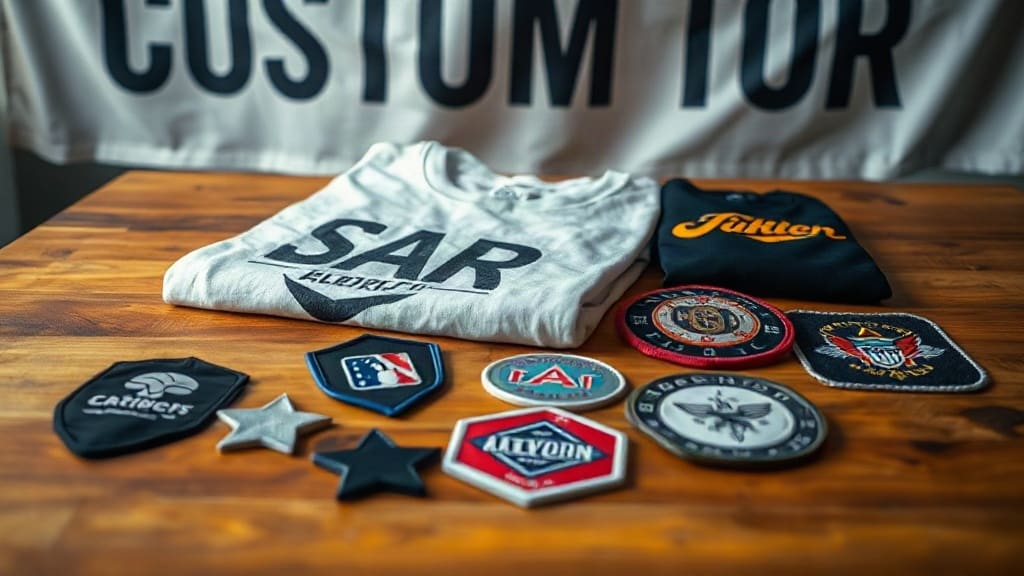
In the world of branded merchandise, two strategies often stand out: print on demand and custom patches. Both offer unique ways to showcase your logo, artwork, or message, but they cater to different needs and audiences. Understanding the nuances between them can save you time, money, and frustration. Whether you're a small business owner, a band manager, or a community organizer, choosing the right method impacts your brand's perception and your bottom line. This article breaks down the key differences, benefits, and use cases for each, and introduces custom banner as a complementary tool to maximize your brand's reach.
What Is Print on Demand?
Print on demand (POD) is a production model where items are printed only after an order is placed. This eliminates the need for bulk inventory, making it ideal for testing designs or offering a wide range of products without upfront investment. Typically, POD involves digital printing on substrates like t-shirts, mugs, posters, and phone cases. The process is automated: a customer orders, the design is printed, and the item is shipped directly. This model has gained immense popularity among e-commerce entrepreneurs and creators who want to sell merchandise without holding stock.
Benefits of Print on Demand
- Low risk: No minimum order quantities, so you can offer hundreds of designs without financial commitment.
- Convenience: Integration with platforms like Shopify, Etsy, and WooCommerce automates fulfillment.
- Scalability: Easily add new products or designs as your audience grows.
- Global reach: Print providers worldwide can ship locally, reducing delivery times and costs.
Drawbacks of Print on Demand
- Quality variations: Print quality depends on the provider and substrate; colors may appear differently than on screen.
- Limited durability: Direct-to-garment prints can fade or crack over time with repeated washing.
- Higher per-unit cost: Without bulk discounts, the cost per item is often higher than traditional manufacturing.
- Less perceived value: Some customers view POD items as less premium than embroidered or patched alternatives.
What Are Custom Patches?
Custom patches are embroidered or woven emblems that can be sewn or ironed onto garments, bags, hats, and more. They offer a tactile, high-quality finish that stands out. Patches are often used by military units, scout groups, sports teams, and brands seeking a premium look. Unlike direct printing, patches are produced separately and then attached, allowing for intricate details, multiple colors, and a three-dimensional effect. They can be made in various shapes, sizes, and backing options (iron-on, sew-on, adhesive, or Velcro).
Benefits of Custom Patches
- Durability: Embroidered patches withstand repeated washing and wear far better than prints.
- Premium feel: The texture and depth of embroidery convey quality and craftsmanship.
- Versatility: Patches can be added to existing garments, allowing for customization without buying new items.
- Collectibility: Patches are often collected and traded, adding a community aspect to your brand.
Drawbacks of Custom Patches
- Higher upfront cost: Setup fees and minimum order quantities can be prohibitive for very small runs.
- Production time: Custom patches require a production lead time, often longer than POD.
- Design constraints: Very fine details or gradients may not translate perfectly to embroidery.
- Attachment required: Unless you offer pre-patched garments, customers must attach patches themselves.
Key Differences: Print on Demand vs Custom Patches
When deciding between print on demand and custom patches, consider these factors:
- Cost structure: POD has no upfront costs but higher per-unit costs; patches have setup costs but lower per-unit costs at scale.
- Quality perception: Patches are often seen as more premium and durable.
- Turnaround time: POD is faster for single items; patches take longer but can be ordered in bulk.
- Customization: POD excels in full-color, complex designs; patches excel in texture and longevity.
- Use cases: POD is great for t-shirts, mugs, and posters; patches are ideal for uniforms, caps, and jackets.
How Custom Banners Fit into Your Branding Strategy
While print on demand and custom patches cover personal items, custom banner extends your brand to physical spaces. A custom banner can be used at events, trade shows, storefronts, or online backgrounds. Unlike patches, banners are large-format prints that grab attention from a distance. They complement your merchandise by creating a cohesive brand presence. For example, if you sell patches at a concert, a custom banner behind your booth reinforces your brand and attracts passersby. Similarly, an online store can use a custom banner as a header image to tie together product photos and patch designs.
When to Choose Print on Demand
Opt for print on demand if you:
- Want to test designs without inventory risk.
- Offer a wide range of products (e.g., t-shirts, mugs, phone cases).
- Need to fulfill orders quickly and automatically.
- Have a limited budget for upfront costs.
- Sell primarily online and want to scale gradually.
When to Choose Custom Patches
Choose custom patches if you:
- Want a durable, premium emblem for uniforms or team gear.
- Have a design that benefits from texture and depth.
- Plan to order in bulk to reduce per-unit costs.
- Want to add a collectible element to your brand.
- Need to attach branding to existing garments.
Combining Both for Maximum Impact
You don't have to choose one over the other. Many brands use print on demand for a wide range of merchandise and custom patches for premium items like hats and jackets. For instance, a band might sell POD t-shirts with album art and also offer custom patches of their logo for fans to sew onto denim jackets. Adding a custom banner at concerts ties it all together. This layered approach caters to different customer preferences and price points.
Frequently Asked Questions
What is the main difference between print on demand and custom patches?
Print on demand involves printing designs directly onto products after an order is placed, with no minimums. Custom patches are embroidered or woven emblems produced separately and attached to items, often requiring a minimum order. The choice depends on your budget, desired quality, and turnaround time.
Are custom patches more expensive than print on demand?
Initially, custom patches may have higher setup costs and minimum order quantities, making the upfront investment larger. However, per-unit costs can be lower at scale. Print on demand has no upfront costs but higher per-unit prices. For small runs, POD is cheaper; for large runs, patches can be more economical.
Can I use custom banners with print on demand products?
Absolutely. A custom banner can showcase your POD products or patch designs at events or online. It creates a professional backdrop and reinforces your brand identity. For example, use a custom banner at a craft fair where you sell POD t-shirts and patches.
Which option is better for a small business just starting out?
If you're testing designs and have a limited budget, print on demand is often the better starting point. It allows you to offer products without inventory risk. As you grow and identify best-sellers, you can invest in custom patches for premium items and a custom banner for events.
How do I ensure high quality with print on demand?
Choose a reputable POD provider that offers sample orders. Check reviews and test different fabrics and printing methods. For custom patches, work with a manufacturer that provides a proof before production. Always order a sample to verify colors and stitching.
Conclusion
Both print on demand and custom patches have their place in a branding strategy. POD offers flexibility and low risk, while patches deliver durability and a premium feel. By incorporating custom banner into your marketing, you create a cohesive brand experience across physical and digital spaces. Evaluate your goals, budget, and audience to choose the right mix. Remember, the best strategy often combines multiple methods to reach a wider audience and reinforce your brand identity.